|
|
 |
|
RUST BULLET HOME & FARM FAQs
Yes. Rust Bullet is the ideal coating for protecting sheet metal buildings and roofs; it not only provides protection from rust and corrosion, but will actually make your metal roof stronger and more weather resistant. Rust Bullet sprays easily and quickly with the use of an airless spray system. Costly replacements can be avoided by simply applying Rust Bullet.
The recommended application method for Rust Bullet on Galvanized Corrugated Roof projects is an airless spray system with a 517 to 523 tip at an approximate 3000 PSI. Two or more coats should be applied depending on the desired dft (dry film thickness); each coat of Rust Bullet will add strength and durability to the metal roof. Please refer to our Application Guidelines for detailed instructions on airless spray systems.
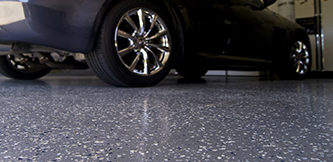
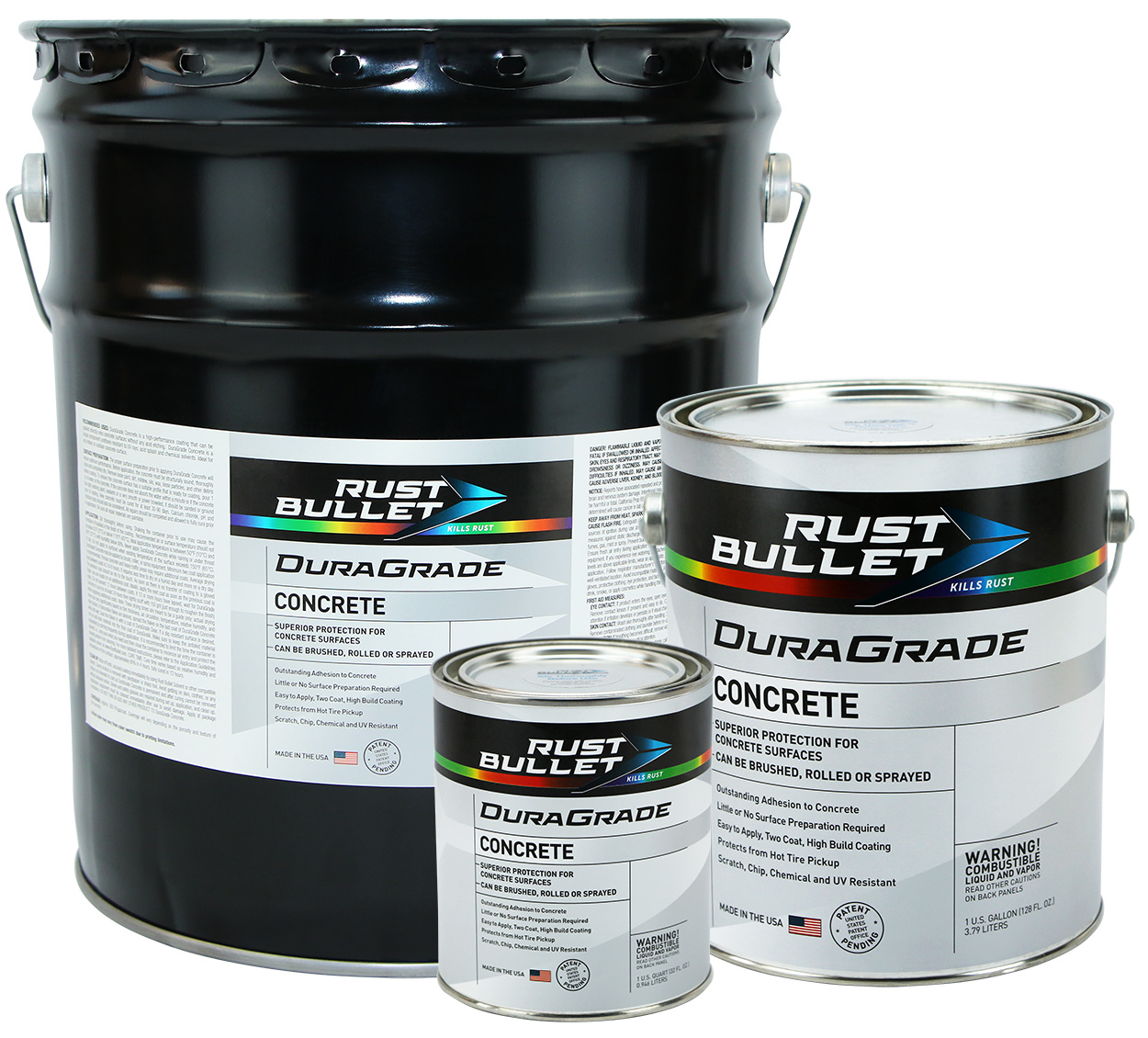
Yes. Rust Bullet, with its Superior Patented Technology for rust and corrosion control provides outstanding protection to many surfaces, including concrete. Rust Bullet not only improves the appearance of concrete, it provides an impervious shield allowing easy clean up of oil, grease, and chemical spills along with strong protection against impact and abrasives. Concrete has been a reliable and versatile product for centuries. Chosen for its strength and durability, concrete is expected to withstand the most abusive conditions. It is subjected to the destructive effects from harsh chemical spills, abrasive objects, moisture, and the impact from heavy tools and machinery often resulting in an unsightly appearance and damage requiring costly repairs or replacement.
Rust Bullet protective coating will:
Provide excellent chemical resistance
Provide protection from abrasives
Seal a surface from moisture
Allow easy clean up of spills
Prevent concrete from sweating
Reduce dust
Fill cracks, gaps, and chips up to ¼ of an inch
Enhance appearance
Add years of life to concrete surfaces
Power wash or simply rinse off dirt and debris and let the surface dry completely before applying Rust Bullet. Two to three coats of Rust Bullet is usually sufficient for most concrete applications depending on the concrete’s condition and existing damage. Porous concrete and heavy traffic areas may require additional coats. Rust Bullet is self leveling and can fill in cracks, gaps, and chips up to ¼ inch. If a slip resistant surface is desired, sprinkle silica or similar fine sand over a tacky coat of Rust Bullet, allow just enough time for the sand to adhere, and then apply the final coat of Rust Bullet.
Yes. Rust Bullet Standard Formula (Gold Label) will provide superior protection from corrosion and abrasives to chain-link fencing adding years of life to the integrity of the steel.
Known for its strength and durability, chain-link is perhaps the most economical type of fencing available. Commercial chain-link fence systems have been preferred for decades to define property lines, adding protection, security, and value to homes and farms. Fence manufacturers make products for many different uses including lightweight, temporary needs. The application of inferior coatings may allow the components to rust prematurely. The result is a permanent installation made from materials that weren't designed for longevity. The protective coating will fail much sooner than loss of steel integrity. Many manufacturers offer warranties that apply only to the loss of structural integrity of the steel, meaning the product has rusted to the point that the strength of the steel is no longer there.
Prior to applying Rust Bullet, simply wire brush the rusted areas to remove loose or flaking rust; wash off dirt and dust and let fence dry completely. The best tool for application to the chain mesh is a long-nap paint roller with a 1 1/2-inch nap; the longer the nap the better because the roller's fibers will reach through and around the fence material. Ideally both sides of the fence can be coated at the same time with the assistance of a co-worker. A brush should be used on the fence rails, posts, hardware, and horizontal supports. If an airless spray system is used, a 517 tip size is recommended. It is important that the area behind the fence be protected from overspray.
Yes. Rust Bullet Standard Formula (Gold Label) will provide superior protection from corrosion and abrasives to wrought iron fencing, furniture, and fixtures, adding years of life to the integrity of the steel. Prior to applying Rust Bullet, simply wire brush the rusted areas to remove loose or flaking rust; wash off any dirt and dust or oil film and let the surface dry completely. The best methods of application for wrought iron are a Close Nap Roller or an Airless Spray System; paint brush application will also work. Inexpensive sprayers can be purchased for home use. Prior to using spray equipment, be sure to run Xylene or Toluene through the equipment to remove any moisture. Please see our Application Information and Guidelines for more detailed information on spray application.
If black is the desired finished color for the wrought iron, use Rust Bullet BlackShell® as a topcoat. BlackShell is formulated with specialized resins and anticorrosive agents and can be used as an excellent stand alone anticorrosive coating that will protect iron and steel. Although BlackShell will easily out-perform other protective coatings, it will not produce the level of protection of the patented Rust Bullet standard or Rust Bullet Automotive formulas for fighting rust and corrosion. For a black finish with the absolute best rust and corrosion protection, apply BlackShell over Rust Bullet® standard or Rust Bullet® Automotive.
Yes. Rust Bullet will provide excellent protection for an Air Duct System. We recommend not running air through the system for at least 72 hours after the final coat of Rust Bullet has been applied. Rust Bullet will encapsulate the rusted areas adding strength to the coated surfaces.
Rust Bullet does pass the Environmental Protection Agency (EPA) Standards for Potable Water; however, Rust Bullet has not been approved as a coating for containers for food or water consumption by the Food and Drug Administration (FDA). Until Rust Bullet has obtained certification from the FDA for use on surfaces that come into contact with food, drinking water or food service equipment, we cannot recommend Rust Bullet Products be used in that capacity.
Fossil fuels, such as refined oils (gasoline, diesel, jet fuels, and kerosene) will not affect the integrity of the cured Rust Bullet Coating. Additionally, renewable fuels such as Biodiesel and Ethanol will have no adverse affect on substrates coated with Rust Bullet Products.
The removal of existing surface paint prior to Rust Bullet application will depend on the condition and type of paint on the surface. To achieve maximum adhesion and protection, it is always recommended to remove any old paint or coating before applying Rust Bullet. If the removal of the existing paint or coating is not possible, the painted surface should be sanded with 100 to 150 grit sandpaper prior to applying Rust Bullet. In this case, apply Rust Bullet over tight paint only; always remove anything loose or flaky.
Rust Bullet is designed to protect rusted and clean metal. It is always advantageous to protect metal, even when there are no visible signs of corrosion. If Rust Bullet is applied only in the rusted areas, it will stop the rust on that surface area, but the uncoated area will be left unprotected. Remember, if it’s made of iron or steel, it will rust and corrode if left unprotected.
Yes, Rust Bullet is compatible with most conventional topcoat paints. Rust Bullet and Rust Bullet Automotive are metallic gray in color and UV resistant; it is only necessary to apply a topcoat if you desire a different color other than metallic gray. A topcoat can be applied between 24 to 48 hours after the final coat of Rust Bullet, without any additional preparation.
Rust Bullet BlackShell® is formulated specifically as the optimum topcoat for both Rust Bullet and Rust Bullet Automotive if a smooth glossy black finish is desired. BlackShell is scratch and chip resistant, UV resistant, as well as, resistant to Acid Splash and Chemical Solvents. BlackShell is an excellent protective stand alone coating, requiring no basecoat or topcoat. BlackShell will easily outperform other protective coatings; however, the unbeatable combination of BlackShell over Rust Bullet or Rust Bullet Automotive will provide the absolute best protection against rust and corrosion available today.
Yes. Rust Bullet BlackShell can be used on bare steel and will provide very good rust and corrosion protection. BlackShell is formulated with specialized resins and anticorrosive agents and can be used as a standalone anticorrosive coating that will protect iron and steel. Although BlackShell will easily out-perform other coatings on bare steel it will not produce the level of protection of the patented Rust Bullet standard or Rust Bullet Automotive formulas for fighting rust and corrosion. For the absolute best rust and corrosion protection available, apply BlackShell® over Rust Bullet® standard or Rust Bullet® Automotive.
 Never allow sweat, rain, mist or other contaminates to fall into a Rust Bullet coating. Even
a drop or two can drastically affect results.
 Rust Bullet coatings are ready to use right from the can. Rust Bullet coatings should be stirred thoroughly for at least 3 minutes or until completely uniform and homogenous (avoid whipping air into product). Shaking the container prior to application may cause the formation of bubbles in the finish of the coating. Never stir the product by mechanical means; this will trap air molecules containing moisture between the coating and the surface causing improper curing and possible coating failure. Pour out of the can what you intend to use in the next 45-60 min. Remember to keep the lid on the remaining product.
 Never allow lacquer thinner, vinyl thinner, epoxy solvent, or any alcohol or unapproved solvent to enter a Rust Bullet coating.
 For clean-up use only clean Xylene, Toluene, or MEK.
 Never neglect to purge all paints, moisture, or debris from equipment before spraying a Rust Bullet coating.
 Never apply a Rust Bullet coating while raining or under threat of rain.
 Rust Bullet coatings do not require a topcoat. If one is desired, wait 24 to 48 hours after the application of the final coat of Rust Bullet.
 Only pour out what you intend to use in one hour and replace the lid immediately. Wipe clean any coating from the rim of the container before resealing.
 Never pour back into the original container; any Rust Bullet coating that has been exposed to outside air for any length of time, as this will destroy the remaining product.
 Care should be taken to ensure that new unopened containers or left-over partial containers are kept sealed. Heavy Duty Plastic Wrap can be placed over the top of the remaining coating with the excess plastic exceeding beyond the rim of the container. This will displace as much air as possible from the remaining coating and will help prevent the lid from permanently sealing closed.
|
|
|
|
|