IMPORTANT: Please read Rust Bullet’s “Application Guidelines” included
with every order. To ensure you achieve the best possible results, it
is extremely important that the Application Guidelines are read thoroughly
before using Rust Bullet Products.
The Application Guidelines are also available at the Bottom
of this page in Adobe PDF Format or by calling Rust Bullet’s
Customer Service Department at 800-245-1600.
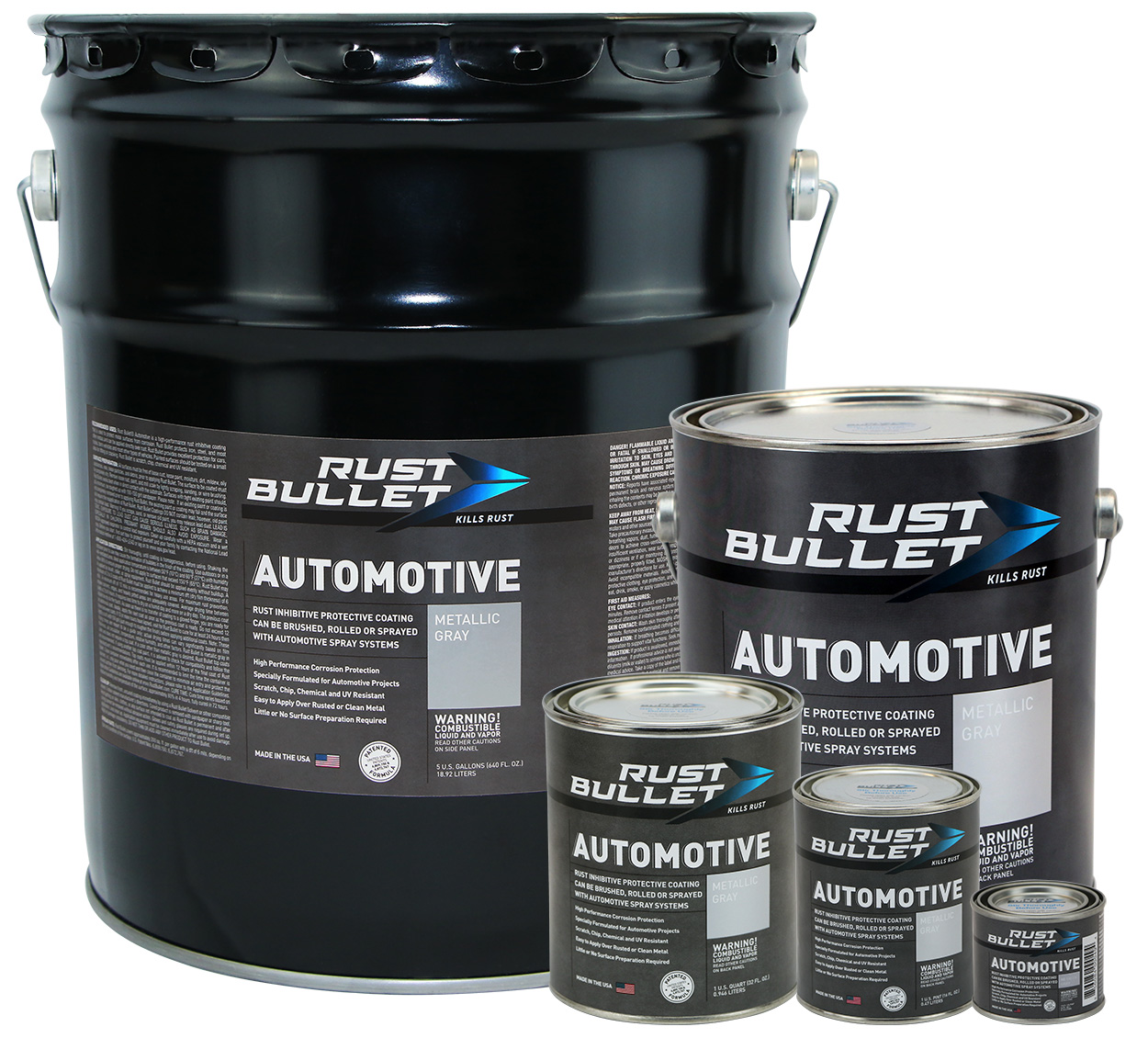
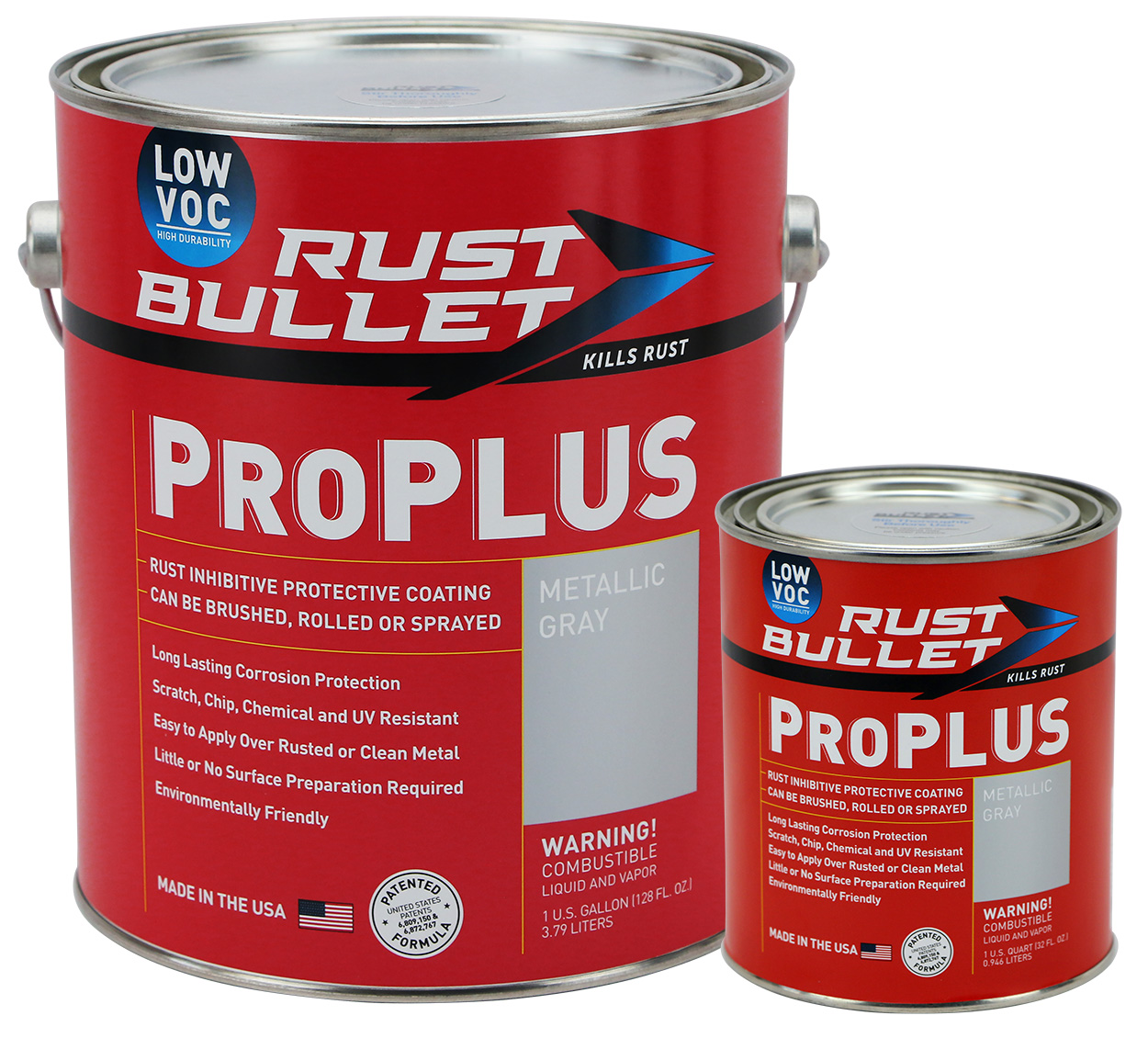
Rust Bullet® and Rust Bullet® Automotive
Rust Bullet and Rust Bullet Automotive are
Super-Tough, High-Performance, Industrial Grade Coatings
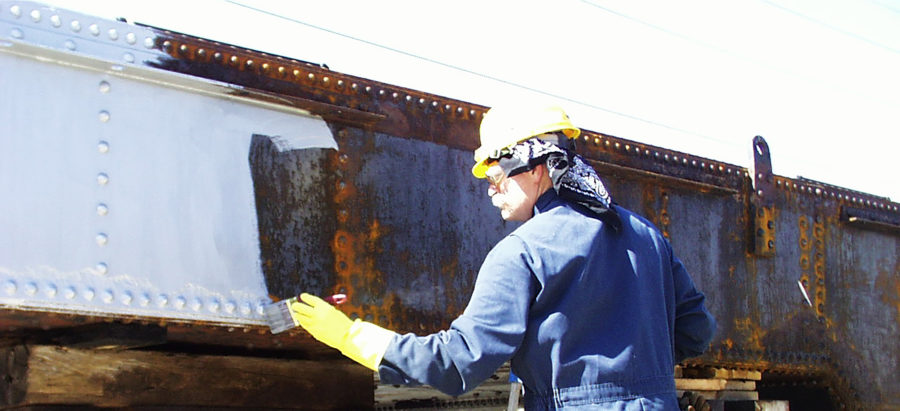
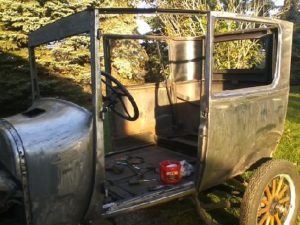
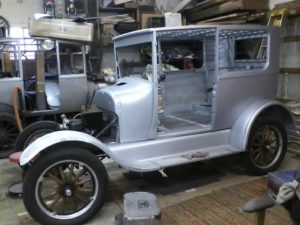
that can be Applied Directly over Rusted Metal and Clean Surfaces,
Providing Permanent Protection with Phenomenal Adhesion. Rust Bullet
has been awarded an Unprecedented Two U.S. Patents by the United
States Patent and Trademark Office.
Rust Bullet BlackShell®
Rust Bullet BlackShell is formulated specifically as a topcoat
for both Rust Bullet formulas if a smooth gloss black finish is desired.
BlackShell is scratch and chip resistant, UV resistant, as well as, resistant
to Acid Splash and Chemical Solvents. BlackShell is an excellent protective
stand alone coating, requiring no basecoat or topcoat. BlackShell will
easily out-perform other protective coatings; however, the unbeatable
combination of BlackShell over Rust Bullet or Rust Bullet Automotive
will provide the absolute best protection against rust and corrosion
available today.
Rust Bullet® Rapid Fire
Rust Bullet Rapid Fire Accelerator is designed for spray
applications of Rust Bullet Standard, Rust Bullet Automotive, and
Rust Bullet BlackShell Rust Inhibitive Coatings. Rapid Fire decreases
the drying time needed between coats, ultimately reducing project
completion times up to 80% while maintaining optimal coating performance.
Rust Bullet® Metal Blast
Rust Bullet Metal Blast Rust Dissolver, Surface Cleaner
and Conditioner removes rust, grease and contaminates. Metal Blast
eliminates the high cost of extensive surface preparations by properly
etching surfaces with minimal or poor adhesive qualities providing
an ideal anchor pattern for a superior coating bond. Metal Blast
enhances the adhesive properties of all Rust Bullet Coatings on any
metal surface including aluminum, stainless steel and shiny polished
metal resulting in optimum coating performance. Metal Blast dissolves
rust from metal tools and equipment, as well as other rusted surfaces,
adding years of performance to any paint project.
SURFACE PREPARATION FOR RUST BULLET COATINGS
The surface to be coated must be completely dry. All surfaces
must be free of loose rust, paint, moisture, dirt, mildew, oily substances,
wax, and loose particles. Remove any loose rust, loose paint, or
loose mill scale by lightly scraping, sanding, or wire brushing.
If necessary, we recommend cleaning the surface with Rust Bullet
Metal Blast. No additional surface preparation is necessary as Rust
Bullet bonds with metal to kill the rust and form a super-tough armor
like coating. Remember that the surface to be coated must be completely
dry. Rust Bullet will penetrate some paints by just scuffing up the
painted surface prior to application; however, Rust Bullet works
best when in direct contact with the rusted surface or bare metal.
When media blasting a surface prior to a Rust Bullet application,
Soda Blasting, Dry Ice Blasting, and Hydro-Blasting are three methods
of media blasting that are effective, clean, and environmentally
safe. All media are sound options and clean up will be relatively
minor.
APPLICATION METHODS FOR RUST BULLET COATINGS
Brush or Roller Application:
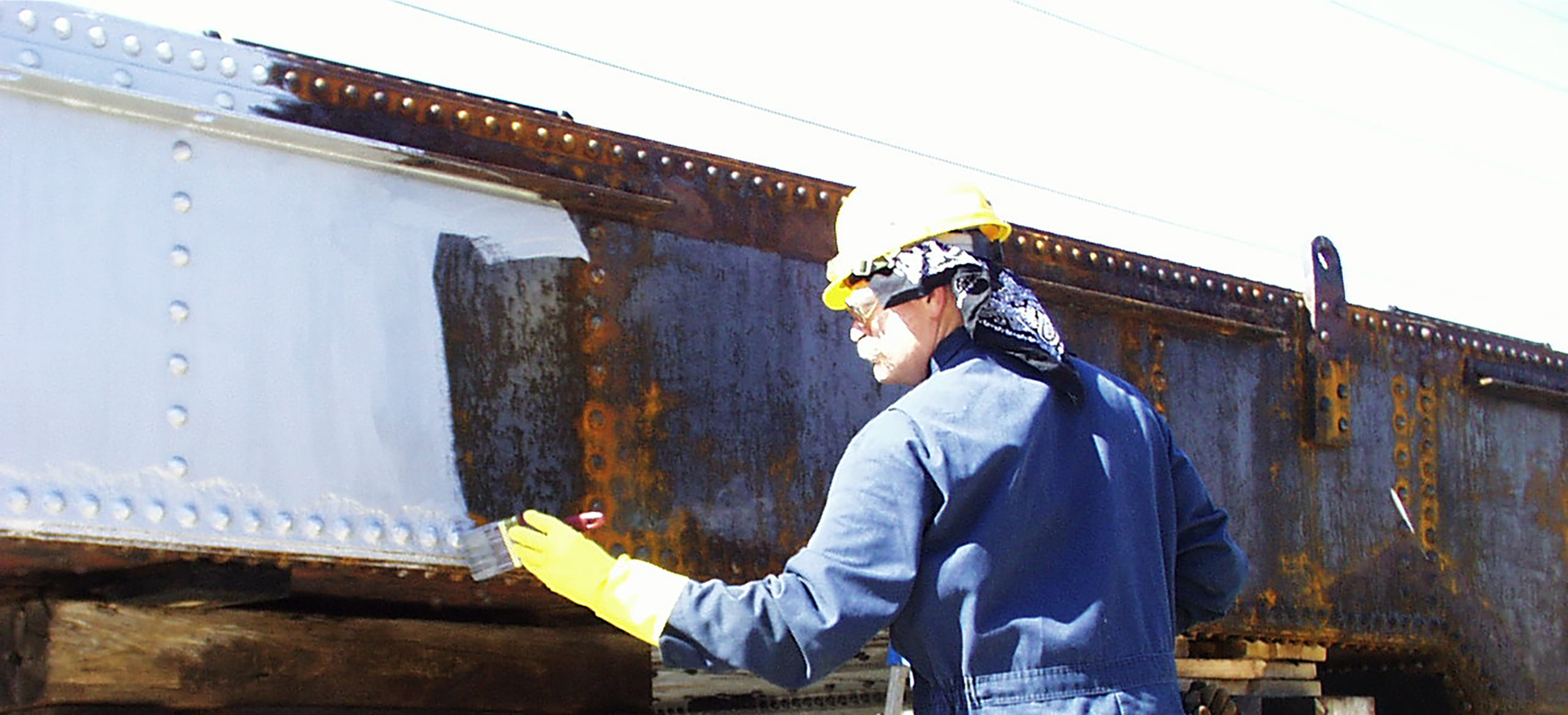
All Rust Bullet Coatings can be applied with a brush or
roller if spray equipment is not available. We recommend using a
close nap roller for most projects. Always keep a wet edge on the
tip of your paint brush. Apply evenly without buildup using the crosshatch
method (up and down and side to side motion); nice even coats using
the crosshatch application method will produce the best results.
HVLP Spray Gun:
The Rust Bullet Automotive Formula is thinner than the
Rust Bullet Standard Formula allowing it to flow easily through
HVLP spray equipment. Rust Bullet Automotive is designed to provide
a shiny smooth paintable finish. When applying with an HVLP spray
system, use a 1.7 to 2.0 tip at 40-60 psi. A minimum dry film thickness
of 6 mils must be applied to the project surface for the 10 year
warranty to be valid; some applications require additional coats
to achieve the appropriate dft expressed in the Rust Bullet Warranty.
Prior to spraying, run Xylene through the spray equipment to remove
any moisture that is trapped in the sprayer. After each coat of
Rust Bullet is applied, flush the gun or submerge the tip in Xylene.
Application equipment must be cleaned immediately after
use to avoid damage to the sprayer. If there is a filter in the
gun it must also be cleaned. Approximately 24-48 hours after the
application of the final coat of Rust Bullet, a topcoat may be applied.
Rust Bullet is metallic gray in color; it is only necessary to apply
a top coat if you desire a different color other than metallic gray.
Rust Bullet BlackShell is formulated specifically to topcoat Rust
Bullet if a smooth gloss black finish is desired. BlackShell is
scratch and chip resistant, UV resistant, as well as, resistant
to Acid Splash and Chemical Solvents. BlackShell is an excellent
protective stand alone coating, requiring no basecoat or topcoat;
however, the combination of BlackShell and Rust Bullet or Rust Bullet
Automotive will provide unbeatable surface protection.
Airless & Commercial Spray Equipment:
The best results are achieved by applying the Rust Bullet
Standard Formula using an airless spray system. An airless spray
application will generally produce a minimum dry film thickness
of 3 to 4 mils per coat. When using airless or commercial spray
equipment to apply Rust Bullet Products, a 517 to 523 tip at an
approximate 3000 psi is recommended.
Xylene is recommended for the preparation and cleanup
of all spray equipment. When the spray gun is not in use, such as
between coats, it should be completely submerged in a container
of Xylene. Application equipment must be thoroughly cleaned immediately
after use to avoid damage; any remaining Rust Bullet will cure and
likely destroy the equipment.
Airless Spray Tips:
Rust
Bullet Standard is supplied ready to stir and apply with an airless
sprayer.
Straining
through a nylon bag strainer is recommended.
Follow
Stirring Instructions thoroughly before application.
Recommended
tip size is a 517 to 523.
Inspect
all spray equipment and ensure it is clean and in good working order
prior to application.
Flush
Xylene or Toluene through pump, line, and gun to remove any existing
moisture or alcohol from previous coatings or solvents. Do not re-circulate
the solvent through the pump, as the solvent will be contaminated
with moisture and debris; draw solvent from one container and flush
into another. Never allow old solvent in the coating lines to enter
Rust Bullet.
Ensure
that minimum cure times are followed before the application of a
subsequent coat. When applying additional coats of Rust Bullet or
BlackShell the previous coat should not be wet or tacky; if you are
unable to transfer the coating to a gloved finger then it is safe
to apply an additional coat. Approximate drying time between coats
is two (2) to four (4) hours for Rust Bullet, and six (6) to ten
(10) hours for BlackShell, depending on humidity levels. When excessive
wet film is applied, additional cure time will be necessary.
EQUIPMENT CLEAN-UP
IMPORTANT: Application equipment must be
cleaned immediately after use to avoid damage.
Use
Xylene, Toluene, or MEK for cleanup; do not substitute any other
solvent.
Do
not make assumptions about other cleanup solvents without consulting
Rust Bullet Customer Support.
Even
a very small contamination of Rust Bullet with alcohol or other hydroxyl-containing
solvents can destroy the moisture-cure reaction, partly or entirely,
without any indication or jelling.
Always
flush equipment clean.
Do
not leave Rust Bullet residue as it will harden and become insoluble
in solvent.
Clean
equipment as you would with any typical two component catalyzed coating.
Always
clean brushes and rollers thoroughly.
Dunking
dirty equipment in solvent will not prevent the coating from curing
overnight.
COMMON APPLICATION QUESTIONS
Complete FAQ's regarding specific applications: Commercial & Industrial,
Automotive, Marine, and Home & Farm are available as a downloadable
document at the bottom of this page or by calling Rust Bullet's Customer
Service Department at 800-245-1600.
When
is the surface ready for the next coat of Rust Bullet?
When applying additional coats of Rust Bullet or BlackShell
the previous coat should not be wet or tacky; if you are unable
to transfer the coating to a gloved finger, the surface is ready
for an additional coat. Approximate drying time between coats is
two (2) to four (4) hours for Rust Bullet, and six (6) to ten (10)
hours for BlackShell depending on humidity levels. When excessive
wet film is applied, additional cure time will be necessary. Rust
Bullet Coatings are moisture sensitive; in high humid conditions
of 80%+, Rust Bullet will cure much faster than it will in lower
humidity. When applying additional coats from one day to the next,
especially in the morning, make sure there is no dew or condensation
on the previous coat. The surface to be coated must be completely
dry.
Rust Bullet® Rapid Fire Accelerator can be added to the
Rust Bullet Standard and Rust Bullet Automotive formulas to decrease
the normal recoat time of 2 to 4 hrs to 5 approximately 30 to 40
minutes per coat; and to Rust Bullet BlackShell to decrease the normal
recoat time of 6 to 10 hours to approximately 1 hour. Rapid Fire
makes it possible to apply multiple coats of Rust Bullet in a single
day and reduces project completion time by as much as 80%. A Rust
Bullet coating accelerated with Rapid Fire can be applied with either
an HVLP Spray System or an Airless Spray System. For maximum rust
prevention, ensure that corners, edges, and heavily pitted areas
are adequately covered. Apply an adequate number of coats sufficient
to achieve the dry film thickness appropriate for the project.
Why
do I need to apply at least two coats of Rust Bullet?
Rust Bullet releases carbon
dioxide gas during the curing process. This “gassing off” process
may create small pin holes in the first coat of Rust Bullet. The
second or third coat seals these tiny pin holes, forming an air tight
armor tuff seal that protects the surface. If the pin holes are not
sealed, air and moisture may penetrate Rust Bullet, allowing rust
and corrosion to form. Rust Bullet is a simple to apply, low maintenance,
super tough, high performance rust inhibitive coating. The first
coat of Rust Bullet penetrates and dehydrates the rust down to the
original metal surface. The second coat of Rust Bullet is necessary
and critical to fill any pin holes in the first coat and ultimately
forms an armor like shield on the surface. A two to three coat application
generally achieves a dft (dry film thickness) of the required 6 mils
for normal applications. Additional coats may be necessary to achieve
the appropriate dft for your project.
What
do I do if I waited too long to apply my next coat of Rust Bullet?
If an additional coat of
Rust Bullet is needed and more than 72 hours have passed, the coated
surface should be etched with Rust Bullet Metal Blast or scuffed up
with 100 grit sandpaper to reopen Rust Bullet’s pores. This will allow
proper adhesion of an additional coat. This 72 hour period is decreased
in areas with higher humidity levels.
When
can I apply a Topcoat?
Approximately 24-48 hours after the application of the
final coat of Rust Bullet, the surface may be top coated. Rust Bullet’s
phenomenal adhesive properties will accept most topcoat paints.
If more than 72 hours have passed since the final coat of Rust Bullet
was applied, the surface should be etched with Rust Bullet Metal
Blast or scuffed up with 100 grit sandpaper to reopen Rust Bullet’s
pores to ensure proper adhesion of a topcoat. This 72 hour period
is decreased in areas with higher humidity levels.
If a spray application of Rust Bullet has been accelerated
by adding Rust Bullet® Accelerator Rapid Fire, a topcoat may be applied
one hour after the final coat of the accelerated Rust Bullet coating
has been applied.
Rust Bullet and Rust Bullet Automotive are metallic gray
in color; it is only necessary to apply a topcoat if you desire a
different color other than metallic gray. Rust Bullet BlackShell
is formulated specifically as a topcoat for both Rust Bullet Standard
and Rust Bullet Automotive formulas if a smooth gloss black finish
is desired. BlackShell is scratch and chip resistant, UV resistant,
as well as, resistant to Acid Splash and Chemical Solvents. BlackShell
is an excellent protective stand alone coating, requiring no basecoat
or topcoat; however, the combination of BlackShell over Rust Bullet
or Rust Bullet Automotive will provide the ultimate surface protection.
Why
do I have Bleed Through?
You should not have rust coming to the surface unless
Rust Bullet was improperly applied. Wipe down the coated surface
with Xylene or other approved solvent and inspect the surface to
rule out the possibility that the rust stains are caused by rusty
water or fluid that has dripped onto the surface coated with Rust
Bullet from another area that was not coated. If another application
of Rust Bullet is necessary due to an inadequate initial application,
etch the existing coating with Rust Bullet Metal Blast or scuff
up the surface with 100 to 150 grit sandpaper and apply an additional
two coats of Rust Bullet or Rust Bullet Automotive. Remember, surfaces
to be coated must be completely dry.
What
causes bubbling in the finish of a project coated with Rust Bullet?
The Three most common reasons for bubbling are:
Applying
Rust Bullet too thick. As Rust Bullet cures, small gas bubbles can
get trapped in overly thick areas of the coating, creating bubbles
in the finish. When using a brush or roller, Rust Bullet should be
applied evenly without buildup in a crosshatch method (an up and down,
side to side continuous motion).
Prematurely
applying a subsequent coat over a partially wet previous coat will
trap the escaping gas during the curing process causing bubbles in
the finished coating.
Shaking
the can creates air bubbles in the product. Prior to application,
Rust Bullet must be stirred thoroughly until completely uniform and
homogeneous (approximately 3 minutes). Shaking the container may cause
the formation of bubbles in the finish of the coating. Avoid whipping
air into product. Do not use electric or mechanical mixing devices
that will whip air into the product.
Should
I apply Rust Bullet only where rust is apparent?
Rust Bullet is designed to protect rusted and clean metal.
It is always advantageous to protect metal, even when there are no
visible signs of corrosion. If Rust Bullet is applied only in the
rusted areas, it will stop the rust on that surface area, but the
uncoated area will be left unprotected. Remember, if it’s made of
iron or steel, it will rust and corrode if left unprotected.
Can
Rust Bullet be applied on damp or wet surfaces?
Rust Bullet is moisture sensitive. It is extremely important
that the surface to be coated is completely dry to allow proper curing
and adhesion. Extreme care should be taken to ensure all coating
projects are completely dry.
What
is the Temperature Service Range of Rust Bullet Coatings?
After curing, all Rust Bullet coatings have a service temperature
range of 314°F (157°C) continuous, and can tolerate maximum temperatures
between 617°- 662°F (325°-350°C) for up to 72 hour periods.
What
can be used to Thin Rust Bullet?
The exact balance of viscosity, solvent, and active ingredients
must be maintained; therefore, Rust Bullet must not be thinned. Thinning
or adding any other product to Rust Bullet will compromise the performance
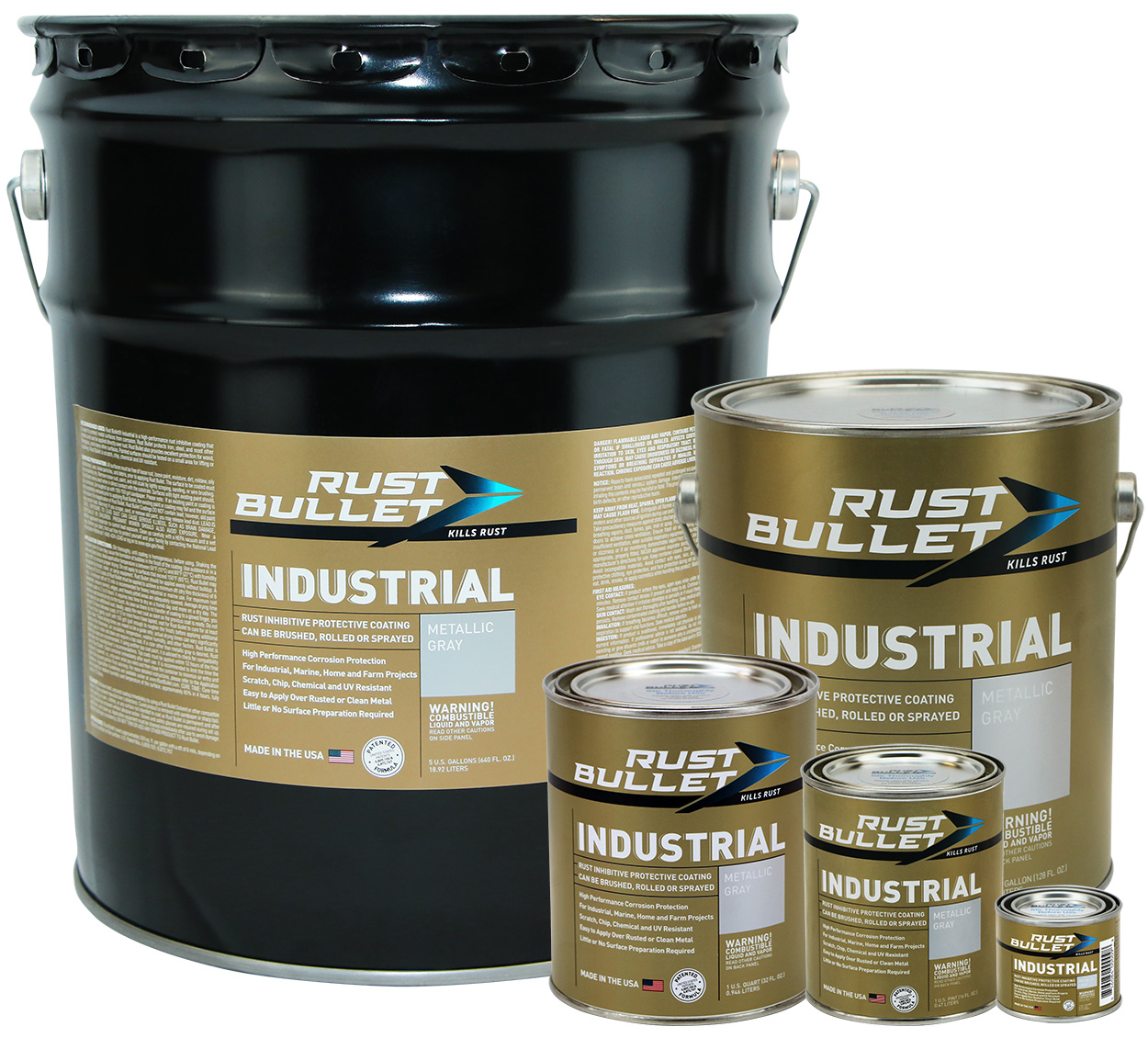
and quality of the finished product. Rust Bullet® Automotive (Silver
Label) is formulated slightly thinner than Rust Bullet Standard (Gold
Label) and can easily be sprayed through an HVLP, Automotive Finishing
Gun.
Can
I pour Rust Bullet into another container?
Yes. If, for any reason, Rust Bullet is transferred to
another container; clean, unlined, paint cans (or similar unlined
metal containers) must be used. Make sure that the container can
be properly sealed. Stir the contents for at least three minutes
before transferring any portion of product to a different container.
During application, pour out the portion you will use in approximately
one hour and reseal the lid as soon as possible.
How
do I remove Rust Bullet from skin?
Take precautions to avoid contact of Rust Bullet Products
with skin, clothing, or other objects not intended to coat. Use
gloves, safety glasses, and other protective equipment. If Rust
Bullet coatings come in contact with skin, immediately wash with
soap and water for at least 15 minutes. Rust Bullet that has dried
on the skin will wear off in approximately seven to ten days.
SAFETY TIPS
For Detailed Safety Information, refer
to the Product MSDS
A certain degree of risk is involved in the use, or more properly,
the misuse, of most industrial materials; Rust Bullet is no exception
to this rule. Ensure adequate ventilation and fresh air when working
with Rust Bullet coatings. Use a NIOSH Approved Respirator with an
8051 Organic Vapor chemical cartridge and an R95 filter attached
with a filter cover. Filters must be changed if and when they become
saturated. Wear protective clothing, gloves, and eye protection during
set up, application, and clean up.
Due to the superior adhesive properties of Rust Bullet,
we strongly recommend that protective clothing be worn including
long sleeves and a spray sock. It is critical to avoid any conditions
that may cause a fire. Avoid open flames, pilot lights, sparks, heating
elements, cigarettes, or any and all possible sources of ignition.
PREPARATION, STORAGE, and CLEAN UP
STIRRING and MIXING
Do
not open and stir a Rust Bullet coating when the temperature is below
the dew point.
Rust
Bullet coatings should be stirred thoroughly for at least 3 minutes
or until completely uniform and homogenous (avoid whipping air into
product). Shaking the container prior to application may cause the
formation of bubbles in the finish of the coating. Never
stir the product by mechanical means; this will trap
air molecules containing moisture between the coating and the surface
causing improper curing and possible coating failure.
Rust
Bullet products that have been sitting for six months or longer may
develop settling. Follow the same stirring instructions, but increase
the stir time and be sure to break up any clumps on the bottom of
the container, if any.
The
exact balance of viscosity, solvent, and active ingredients must
be maintained; therefore, Rust Bullet coatings must not be thinned.
Thinning or adding any other product to a Rust Bullet coating will
compromise the performance and quality of the finished product.
PRODUCT STORAGE and HANDLING
Care
should be taken to ensure that new unopened containers or left-over
partial containers are kept sealed. A plastic polyethylene film may
be laid on top of remaining material to displace as much air as possible.
Rust
Bullet coatings are moisture sensitive; limit the time the container
is opened. During application, pour out the portion you will use
in approximately one hour and reseal the lid as soon as possible.
Immediately wipe clean any Rust Bullet from the rim of the container
and reseal. This should be done every time you use Rust Bullet and
in between coats. Never pour back into the original container any
Rust Bullet coating that has been exposed to the outside air for
any length of time because it will destroy the remaining product.
The
shelf life of Rust Bullet coatings is at least two years for unopened
containers and approximately three to four months for containers
that have been opened. Product storage temperature range is 33°F
to 120°F. Rust Bullet is a specialized moisture sensitive product;
containers that have been opened should be used within in a few months
for proper coating performance.
CLEAN UP TIPS
Use
Xylene, Toluene, or MEK. Do not substitute any other solvent. Do
not make assumptions about other cleanup solvents without consulting
Rust Bullet Customer Support. Even a very small contamination of
Rust Bullet with alcohol or other hydroxyl-containing solvents can
destroy the moisture-cure reaction partly or entirely without any
indication or jelling.
Spills
must be cleaned up immediately or the product will harden and become
next to impossible to remove. Avoid getting on body, clothes, or
any surface not intended to be coated. Rust Bullet coatings are permanent;
after curing, Rust Bullet can only be removed with rigorous abrasive
action. Clean up fresh, uncured Rust Bullet immediately by using
Xylene, Toluene, or MEK, following the solvent manufacturer’s directions.
Washing with soap and water may work, if done immediately.
Application
equipment must be cleaned immediately after use to avoid damage.
Thoroughly flush equipment clean. Do not leave residue as it will
harden and become insoluble in solvent. Clean equipment as you would
with any typical two component catalyzed coating. Always clean brush
or roller thoroughly. Dunking dirty equipment in solvent will not
prevent the coating from curing overnight.
IMPORTANT POINTS TO REMEMBER WHEN USING RUST BULLET PRODUCTS
Never
allow sweat, rain, mist or other contaminates to fall into a Rust
Bullet coating. Even a drop or two can drastically affect results.
Rust
Bullet coatings are ready to use right from the can. Rust Bullet
coatings should be stirred thoroughly for at least 3 minutes or until
completely uniform and homogenous (avoid whipping air into product).
Shaking the container prior to application may cause the formation
of bubbles in the finish of the coating. Never stir the product by
mechanical means; this will trap air molecules containing moisture
between the coating and the surface causing improper curing and possible
coating failure. Pour out of the can what you intend to use in the
next 45-60 min. Remember to keep the lid on the remaining product.
Never
allow lacquer thinner, vinyl thinner, epoxy solvent, or any alcohol
or unapproved solvent to enter a Rust Bullet coating.
For
clean-up use only clean Xylene, Toluene, or MEK.
Never
neglect to purge all paints, moisture, or debris from equipment before
spraying a Rust Bullet coating.
Never
apply a Rust Bullet coating while raining or under threat of rain.
Rust
Bullet coatings do not require a topcoat. If one is desired, wait
24 to 48 hours after the application of the final coat of Rust Bullet.
Only
pour out what you intend to use in one hour and replace the lid immediately.
Wipe clean any coating from the rim of the container before resealing.
Never
pour back into the original container; any Rust Bullet coating that
has been exposed to outside air for any length of time, as this will
destroy the remaining product.
Care
should be taken to ensure that new unopened containers or left-over
partial containers are kept sealed. Heavy Duty Plastic Wrap can be
placed over the top of the remaining coating with the excess plastic
exceeding beyond the rim of the container. This will displace as
much air as possible from the remaining coating and will help prevent
the lid from permanently sealing closed.