Rust Remover Buy Rust Converter Now

Frequently Asked Questions

For Marine Application


What is the recommended method of Application for Marine use?
What are the recommendations on Surface Preparation or Media Blasting?
Is it necessary to remove surface paint prior to applying Rust Bullet?
Should I Apply Rust Bullet only where Rust is Apparent?
Are additional coats of Rust Bullet required for Marine Applications?
Is there a recommendation of the number of coatings for a ship submerged in Seawater and what is the effect of Saltwater on Rust Bullet?
Can Rust Bullet be used for Wrought Iron Fencing, Furniture, and Fixtures?
Does Rust Bullet recommend the use of antifouling paint?
Can Rust Bullet be used on Gasoline Tanks?
Can Rust Bullet be applied to an Aluminum Hull?
What are the effects of Fuels on a cured Rust Bullet Coating?


1. What is the recommended method of Application for Marine use?


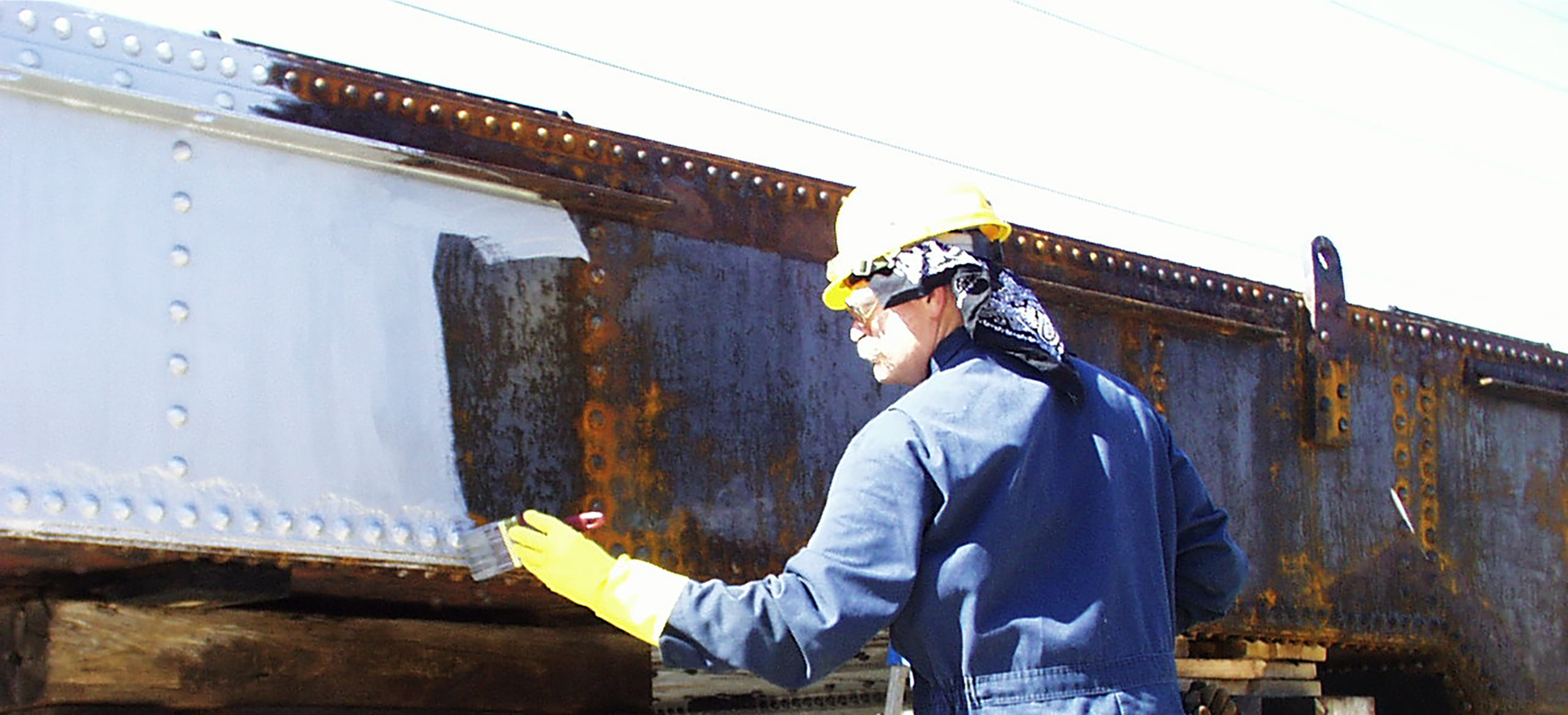
Rust Bullet coatings can be applied by brush, roller or spray equipment. An airless spray system using a 517 or a 523 tip at 3000 PSI pressure is the suggested method for Marine, Industrial, or Military applications. A minimum dry film thickness (DFT) of 12 mils is required for the 10 year warranty to apply. It is recommended that before and after each coat of Rust Bullet is applied; the pump, lines, and sprayer be flushed with Xylene. It is essential to keep the application equipment clean and the line free of any build up of Rust Bullet product.

Application equipment must be cleaned immediately after use to avoid damage to the equipment.


Back to Top


2. What are the recommendations on Surface Preparation or Media Blasting?


The substrate must be free of loose rust, paint, moisture, dirt, mildew, oily substances, wax, and loose particles. The surface to be coated must be completely dry. Although it is not always necessary to blast surfaces prior to a Rust Bullet application, Soda Blasting and Dry Ice Blasting are two methods of media blasting that are effective, clean, and environmentally safe. Both media are sound options and clean up will be relatively minor including the drying procedure after the dry ice blasting.


Back to Top


3. Is it necessary to remove surface paint prior to applying Rust Bullet?


The removal of existing surface paint prior to Rust Bullet application will depend on the condition and type of paint on the surface. To achieve maximum adhesion, it is always recommended to remove any old paint or coating before applying Rust Bullet.


Back to Top


4. Should I Apply Rust Bullet only where Rust is Apparent?


Rust Bullet is designed to protect rusted and clean metal. It is always advantageous to protect metal, even when there are no visible signs of corrosion. If Rust Bullet is applied only in the rusted areas, it will stop the rust on that surface area, but the uncoated area will be left unprotected. Remember, if it’s made of iron or steel, it will rust and corrode if left unprotected.


Back to Top


5. Are additional coats of Rust Bullet required for Marine Applications?


Rust Bullet requires a minimum 12 mil DFT for any Marine or Industrial applications to qualify for the 10 year Warranty. Rust Bullet can be applied by brush, roller or spray equipment. The application method used will determine the number coats that are needed to achieve a minimum DFT of 12 mils. When using a roller or airless sprayer, two to three coats of Rust Bullet’s Standard Formula will generally achieve a DFT of 8 to12 mils. It is our experience that a brush application will generally achieve a DFT of 2 to 3 mils per coat.

As Rust Bullet cures it releases carbon dioxide gas while dehydrating the rust. This process of “gassing off” (expelling solvents) may create small pin holes in the first coat of Rust Bullet. A generous initial coat of Rust Bullet will penetrate the rust down to the original metal surface while the second and any successive coats seal these tiny pin holes, forming an air tight, armor like shield over the application surface. If these pin holes are not sealed after the first coat, air and moisture may penetrate the Rust Bullet, allowing rust and corrosion to form.


Back to Top


6. Is there a recommendation of the number of coatings for a ship submerged in Seawater and what is the effect of Saltwater on Rust Bullet?


A minimum DFT of 12 mils is recommended for Marine applications. Additional mils may be needed for adequate protection dependent upon substrate and exposures. Sea temperatures vary as does the salt content; these factors may also help determine the appropriate DFT. Salt water should have minimal effect on Rust Bullet. Refer to ASTM B117 Seawater Spray (Fog) Test Results and ASTM D870 Seawater Immersion Resistance Test Results for further technical and engineering data on salt water exposures.


Back to Top


7. Can Rust Bullet be used for Wrought Iron Fencing, Furniture, and Fixtures?


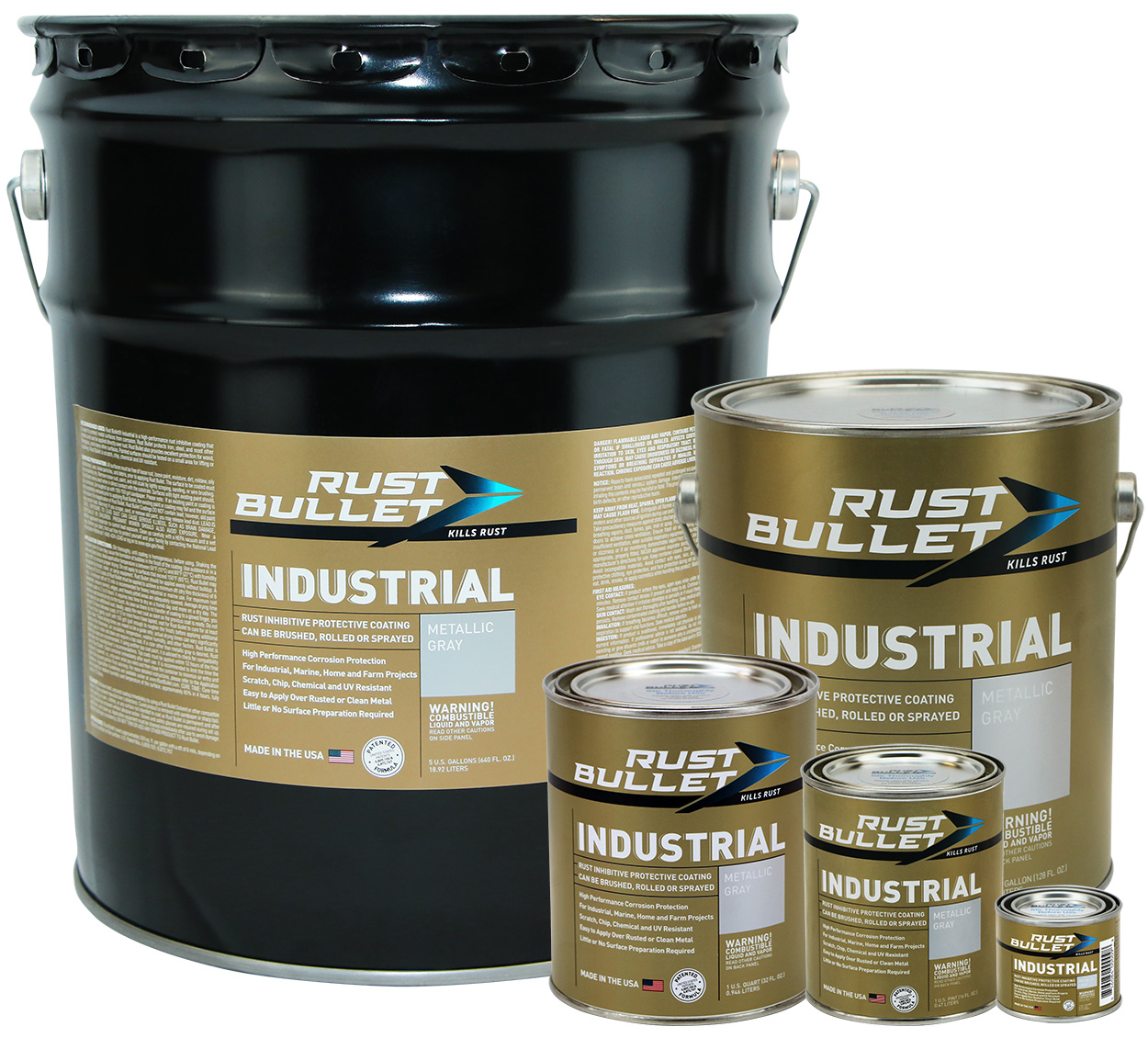
Yes. Rust Bullet Standard Formula (Gold Label) will provide superior protection from corrosion and abrasives to wrought iron fencing, furniture, and fixtures, adding years of life to the integrity of the steel. Prior to applying Rust Bullet, simply wire brush the rusted areas to remove loose or flaking rust; wash off any dirt and dust or oil film and let the surface dry completely. The best methods of application for wrought iron are a Close Nap Roller or an Airless Spray System; paint brush application will also work. Inexpensive sprayers can be purchased for home use. Prior to using spray equipment, be sure to run Xylene or Toluene through the equipment to remove any moisture. Please see our Application Information and Guidelines for more detailed information on spray application.

If black is the desired finished color for the wrought iron, use Rust Bullet BlackShell® as a topcoat. BlackShell is formulated with specialized resins and anticorrosive agents and can be used as an excellent stand alone anticorrosive coating that will protect iron and steel. Although BlackShell will easily out-perform other protective coatings, it will not produce the level of protection of the patented Rust Bullet standard or Rust Bullet Automotive formulas for fighting rust and corrosion. For a black finish with the absolute best rust and corrosion protection, apply BlackShell over Rust Bullet® standard or Rust Bullet® Automotive.


Back to Top


8. Does Rust Bullet recommend the use of antifouling paint?


Rust Bullet provides durable surface protection that is scratch, chip, chemical, and UV resistant. Antifouling bottom paints reduce or eliminate marine growth that develops on a boat’s underwater surface. Antifouling paints do this by using biocides (chemicals) that slowly release to repel underwater aquatic life. Most antifouling paints require a chemical reaction with the surface to which it is applied for proper adhesion. If you do use antifouling paint, etching the Rust Bullet surface with Rust Bullet® Metal Blast may be necessary for proper adhesion. Always check with the antifouling paint’s manufacturer before applying an antifouling paint over Rust Bullet.


Back to Top


9. Can Rust Bullet be used on Gasoline Tanks?


Rust Bullet is not affected by gas itself. Rust Bullet was not designed as a tank sealer for the inside of gasoline tanks We have not tested for this application and can offer no promise as to what the outcome will be if used as such. Rust Bullet can be used on the exterior, but it was not designed for internal use on a gas tank.


Back to Top


10. Can Rust Bullet be applied to an Aluminum Hull?


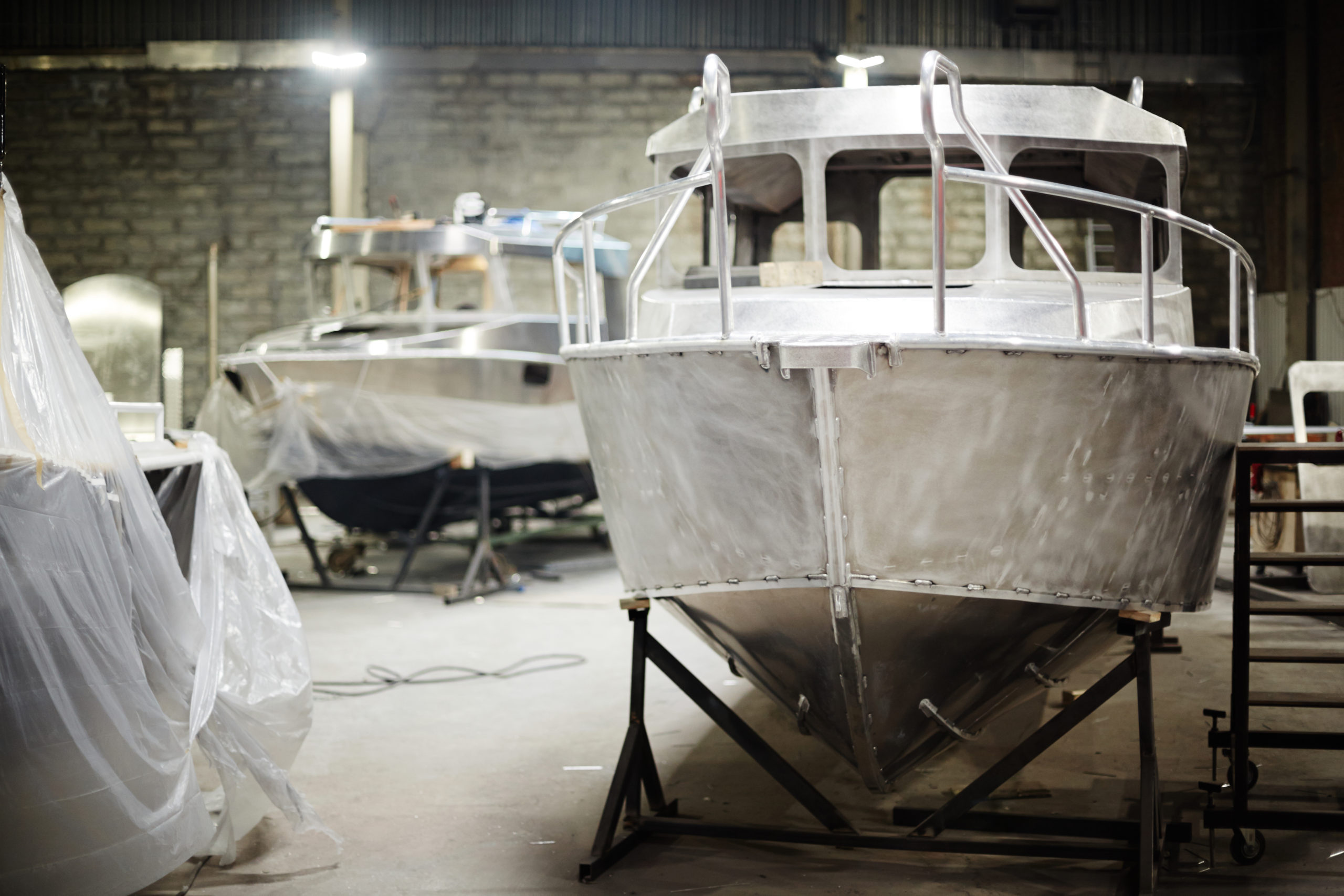
Yes; Rust Bullet can be applied directly to the clean surface of an Aluminum Hull. Etching the aluminum surface with Rust Bullet Metal Blast prior to the application of Rust Bullet is recommended for optimal adhesion.


Back to Top


11. What are the effects of Fuels on a cured Rust Bullet Coating?


Fossil fuels, such as refined oils (gasoline, diesel, jet fuels, kerosene) will not affect the integrity of the cured Rust Bullet Coating. Additionally, renewable fuels such as Biodiesel and Ethanol will have no adverse affect on substrates coated with Rust Bullet Products.


IMPORTANT POINTS TO REMEMBER WHEN USING RUST BULLET PRODUCTS


Never allow sweat, rain, mist or other contaminates to fall into a Rust Bullet coating. Even
a drop or two can drastically affect results.


Rust Bullet coatings are ready to use right from the can. Rust Bullet coatings should be stirred thoroughly for at least 3 minutes or until completely uniform and homogenous (avoid whipping air into product). Shaking the container prior to application may cause the formation of bubbles in the finish of the coating. Never stir the product by mechanical means; this will trap air molecules containing moisture between the coating and the surface causing improper curing and possible coating failure. Pour out of the can what you intend to use in the next 45-60 min. Remember to keep the lid on the remaining product.


Never allow lacquer thinner, vinyl thinner, epoxy solvent, or any alcohol or unapproved solvent to enter a Rust Bullet coating.


For clean-up use only clean Xylene, Toluene, or MEK.


Never neglect to purge all paints, moisture, or debris from equipment before spraying a Rust Bullet coating.


Never apply a Rust Bullet coating while raining or under threat of rain.


Rust Bullet coatings do not require a topcoat. If one is desired, wait 24 to 48 hours after the application of the final coat of Rust Bullet.


Only pour out what you intend to use in one hour and replace the lid immediately. Wipe clean any coating from the rim of the container before resealing.


Never pour back into the original container; any Rust Bullet coating that has been exposed to outside air for any length of time, as this will destroy the remaining product.


Care should be taken to ensure that new unopened containers or left-over partial containers are kept sealed. Heavy Duty Plastic Wrap can be placed over the top of the remaining coating with the excess plastic exceeding beyond the rim of the container. This will displace as much air as possible from the remaining coating and will help prevent the lid from permanently sealing closed.


Please contact our Customer Service Department at 800-245-1600
or info@rustbullet.com with questions, concerns or comments.


Rust Bullet, LLC
300 Brinkby Avenue, Suite 200
Reno, NV 89509
USA
www.RustBullet.com


Rust Remover


McAfee Secure sites help keep you safe from identity theft, credit card fraud, spyware, spam, viruses and online scams
Rust Bullet, LLC ©2002 - 2009 All rights reserved.